Mercury
A private messenger with no company in the middle. Messages are encrypted on the device, carried by a mesh of peers and readable only by the person they are meant for.
Most messengers ask you to trust the server. Mercury is built so there is no server to trust.
Identity, encryption and delivery all happen between peers. There is no central registry of users and no relay that can read what passes through it. The project brings together the parts of software I find most interesting: cryptography, network design and making a complex system easy to watch.
Taking out the central server removes a single point of failure. It also removes everything the server used to do.
Without one, the system still has to answer the hard questions. How do people find and trust each other? How is a message protected end to end? And how does it arrive when the network is slow, lossy or partly offline?
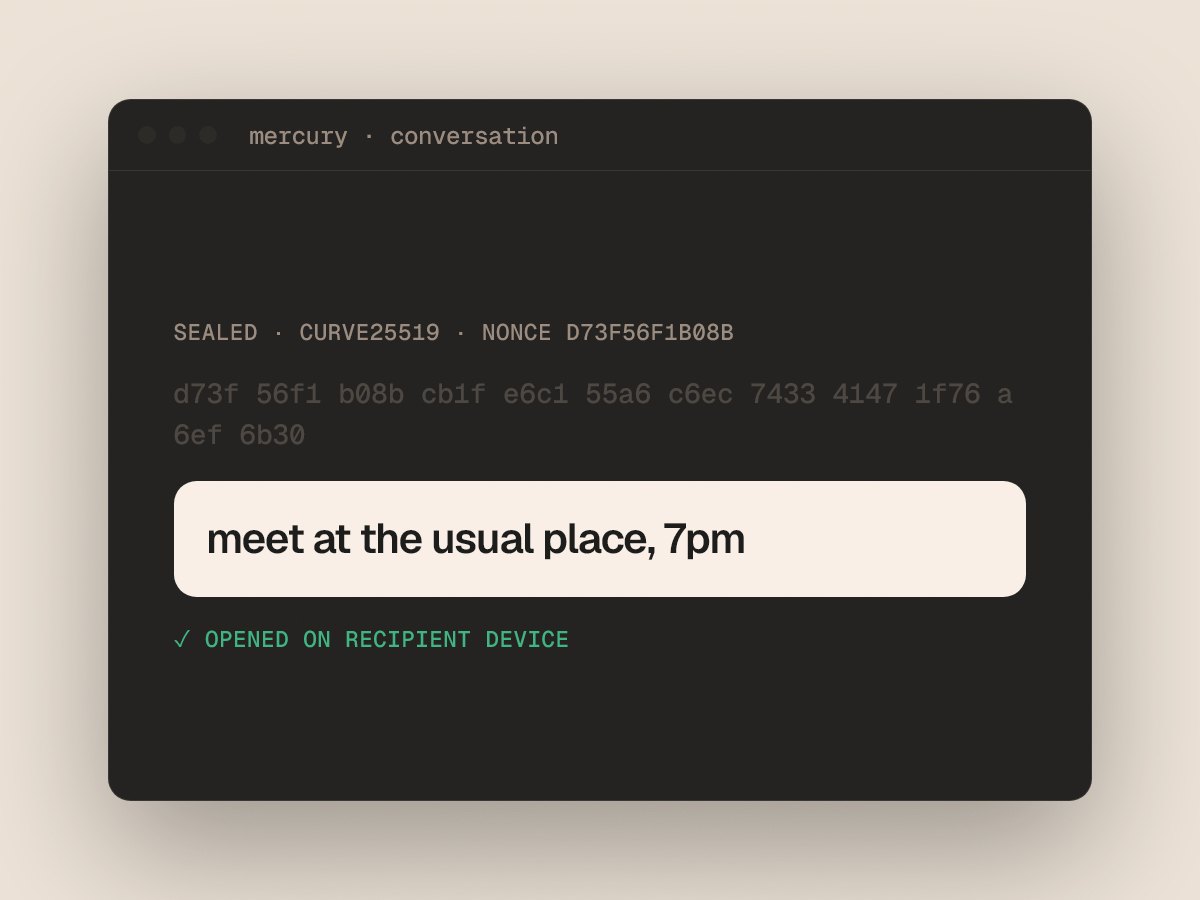
- End-to-end encryptionCurve25519 public-key encryption with a fresh random nonce for every message.
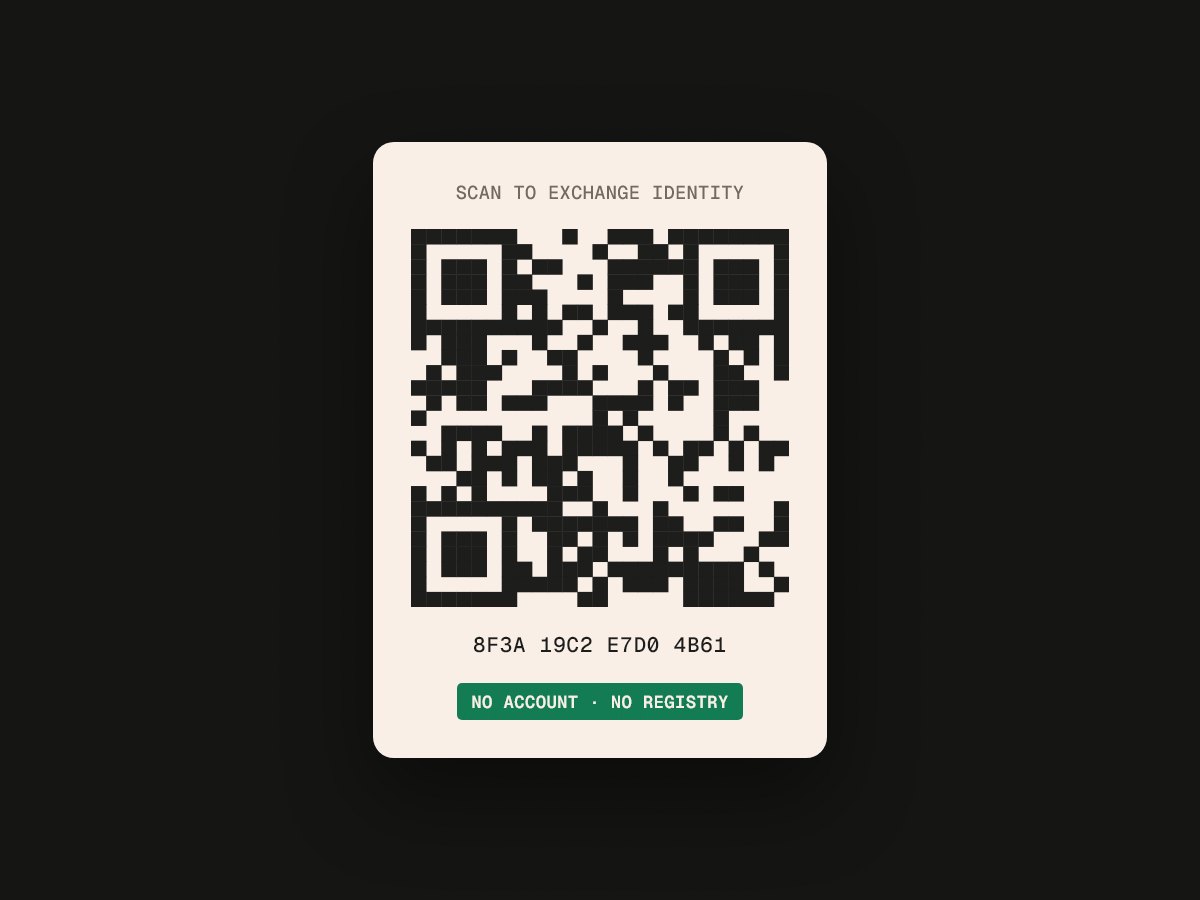
- Decentralised identityNo central registry. Peers exchange identities out of band by scanning a QR code.
- Protected local storageIdentities are stored on the device and hashed with Argon2id.
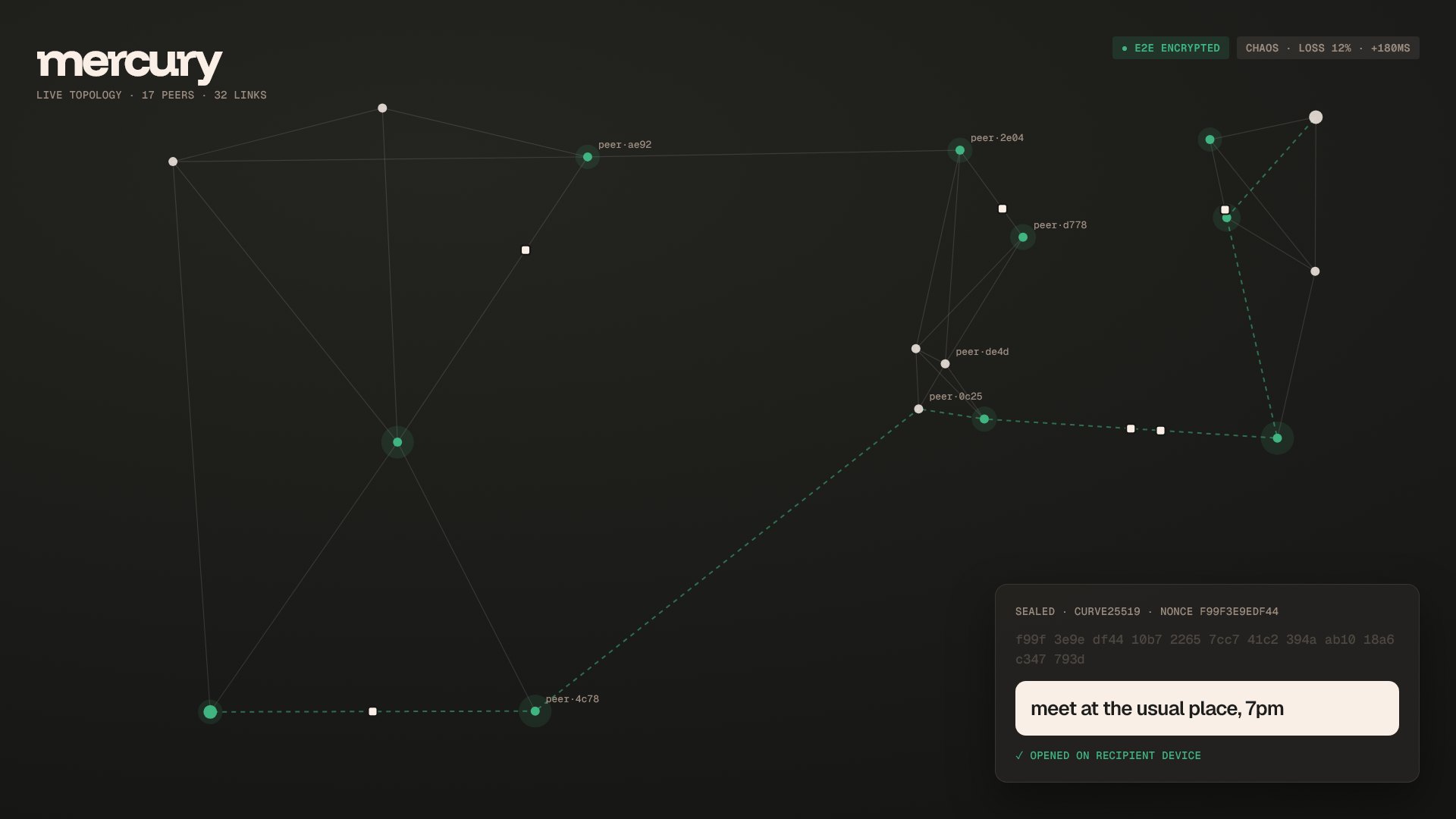
- Multi-hop relay meshMessages travel through other peers to reach people who are not directly connected.
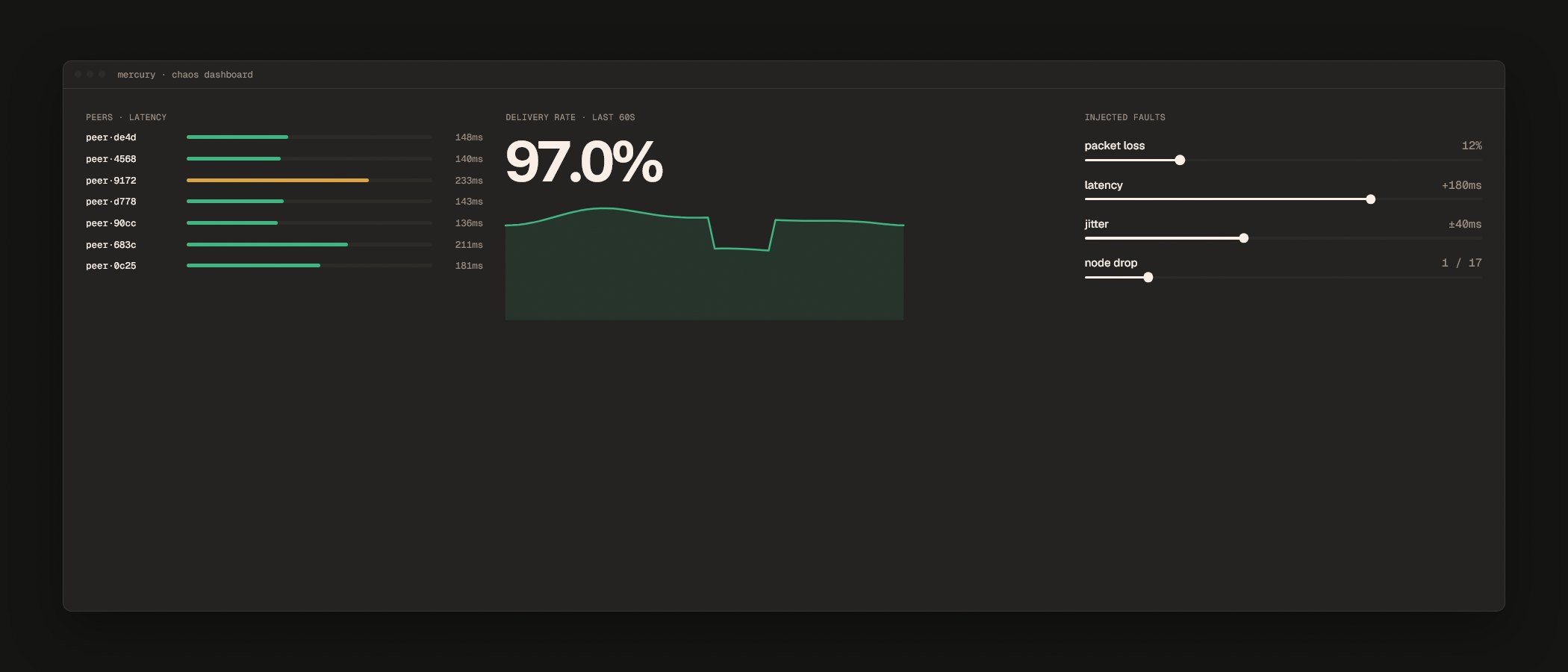
- Chaos layerConfigurable packet loss and latency, injected on purpose to test delivery on bad networks.
- Live topology dashboardEvery node and route, visible in real time.
Meet in person
Two people scan each other’s QR code to exchange public identities. No account, phone number or registry.
Encrypt on the device
Each message is sealed with the recipient’s public key and a new nonce before it leaves the sender.
Relay through the mesh
Peers pass the sealed message along until it reaches the only person able to open it.